







Why Daewoo washing machines break down: design and weak points
Daewoo washing machines are a common appliance in Russia with a characteristic set of wearing components. Let's look at what fails first, how the DWF, DWD and DWS lines differ, and when restoration is still worthwhile.
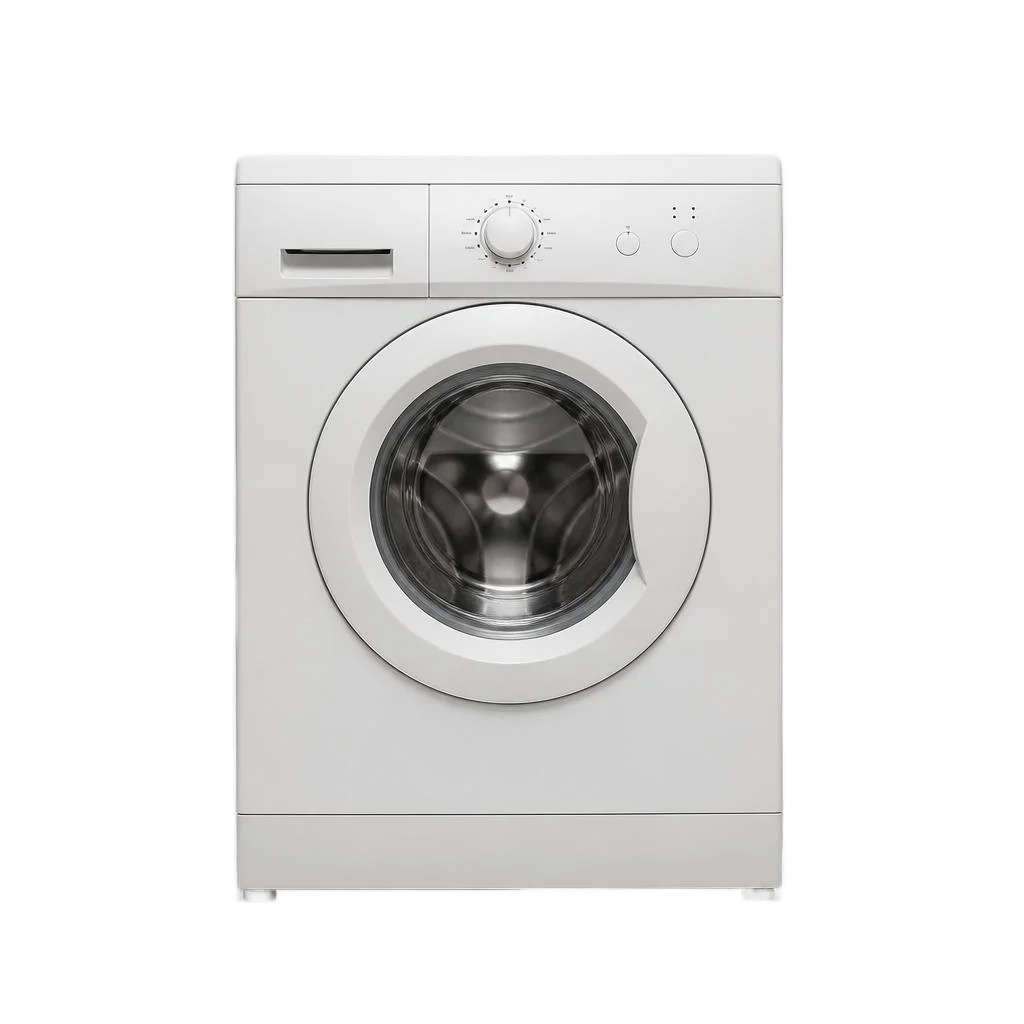
Daewoo washing machine design: which components wear out first
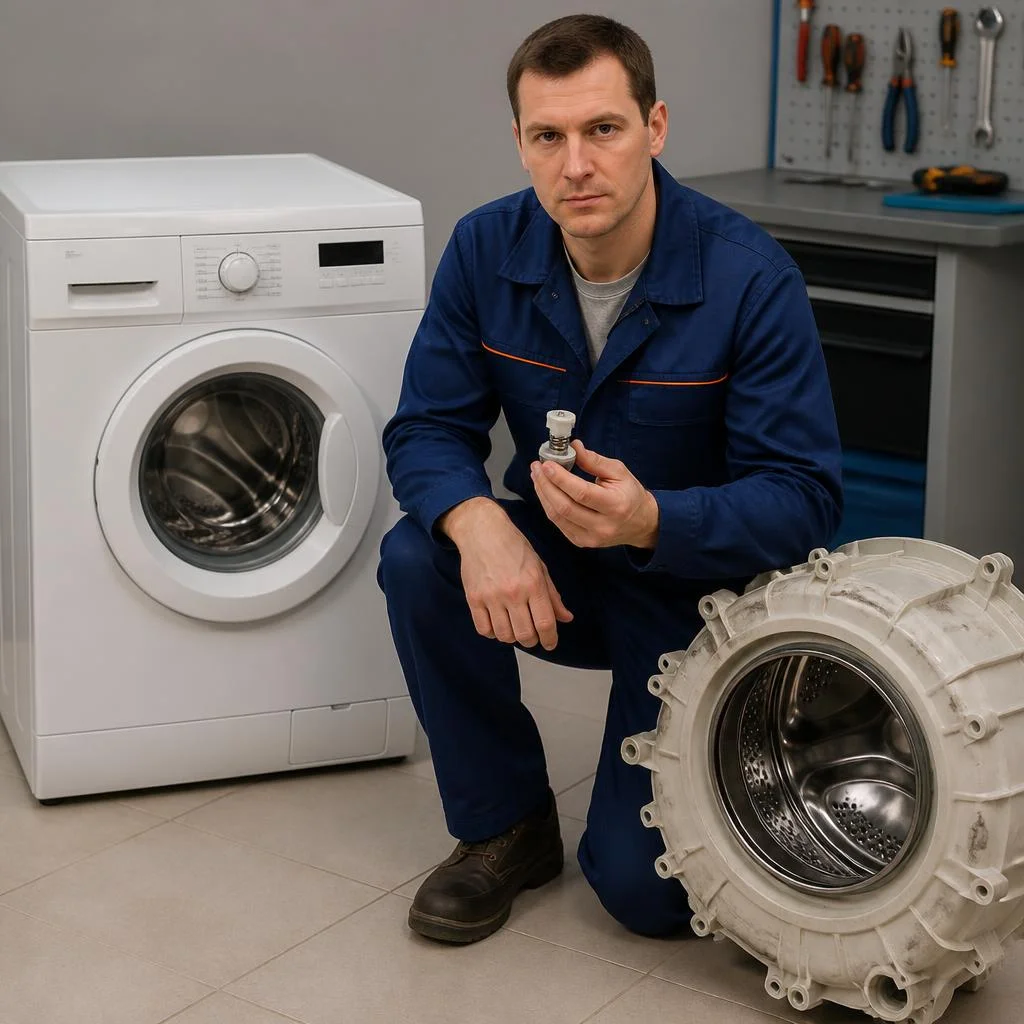
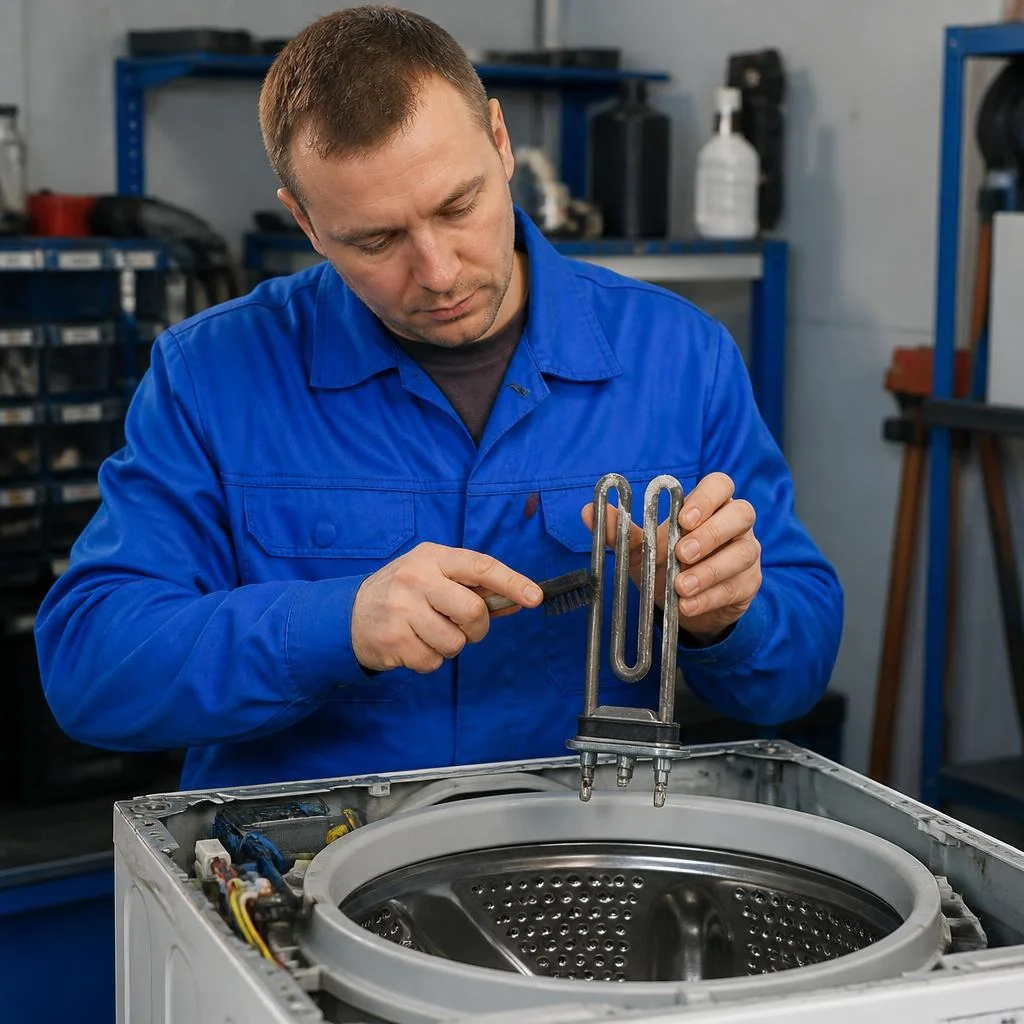
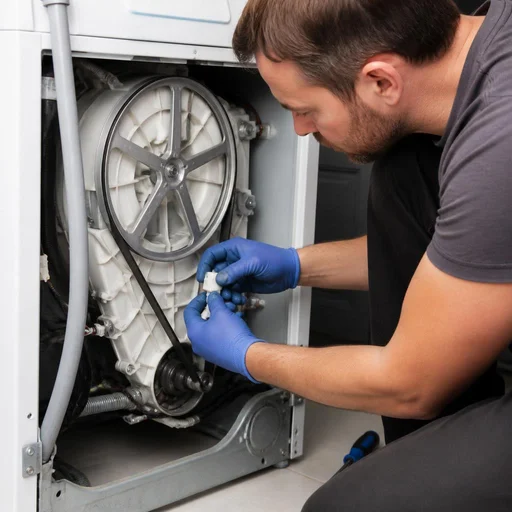
The main wearing components are the drain pump, the heating element, the drum bearings and the electronic module; these account for up to 70% of service calls. The drain pump gets clogged with lint and small objects from pockets, the heating element becomes coated with scale, the bearing assembly wears out from imbalance during spinning, and the control board suffers from voltage surges and moisture ingress. In the belt-driven models DWF-8100 and DWS-7101, the belt is added to the list — it stretches and begins to slip. The service life of a component depends on water hardness and load: with daily washes at 60 °C, scale builds up on the heating element noticeably faster than with washes at 30–40 °C. Regular cleaning of the drain filter and washing at low temperatures postpone replacement of the heater by one to two years.
DWF, DWD and DWS series: how Daewoo's lines differ
- DWF (e.g. DWF-8100): classic front loading with a belt drive, mechanical or semi-electronic controls and a standard tub.
- DWD (e.g. DWD-F1011): direct drive without a belt, an electronic module with a display, an imbalance sensor and leak protection.
- DWS (e.g. DWS-7101): slim and compact bodies around 40 cm deep for small kitchens and bathrooms, often with a reduced load.
- Diagnostics of the DWD series: the belt does not wear out here, but the electronics are sensitive to voltage fluctuations — checks start with the board.
Daewoo washing machine service life and when repair is worthwhile
With careful use, a Daewoo washing machine lasts 7–10 years; after 8–10 years, restoration is worthwhile if the cost of the work is comparable to the price of a new machine. In practice, belt-driven DWF series appliances last the longest: the belt and motor brushes are inexpensive to replace, and the tub and spider hold up for 10–12 years when loaded no higher than the rated capacity. The electronics of the DWD series fail earlier than the mechanical parts — the module is sensitive to power surges, so its service life is shortened by frequent power outages. Most often, repairs concern the DWF and DWS series: here the belt and bearing assembly wear out. Preventive maintenance helps extend the service life — cleaning the drain filter once every 3–6 months and removing scale from the heating element noticeably postpone major repairs. Before calling a technician, check the age of the machine and its repair history: on models older than 10 years, it is cheaper to replace an assembly as a whole than to restore it piece by piece. This is exactly how customers phrase their request — Daewoo washing machine repair — and the technician immediately understands what is meant.
Typical faults and what they mean
By how the machine behaves, you can roughly tell which component has failed. Below are the most common symptoms and what lies behind them.
The machine does not drain water or does not spin
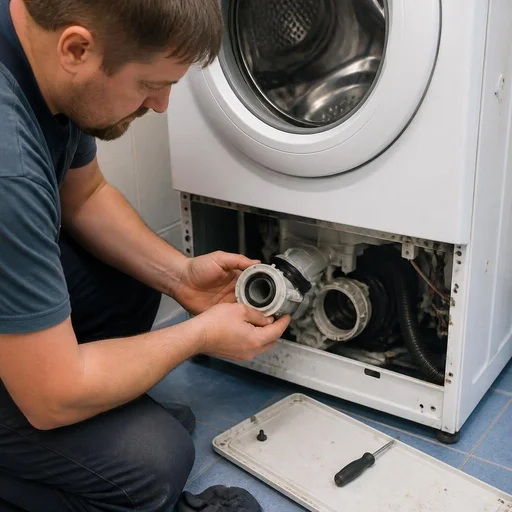
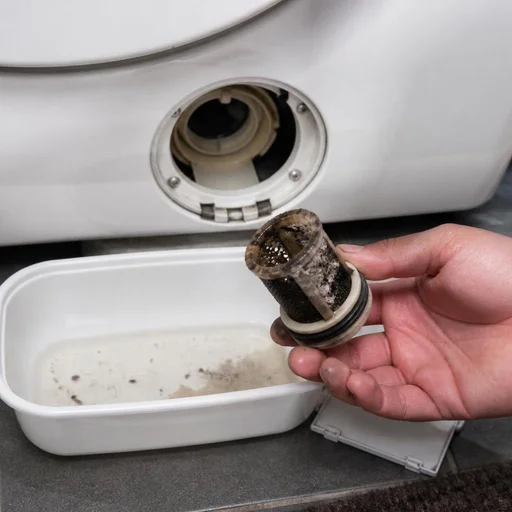
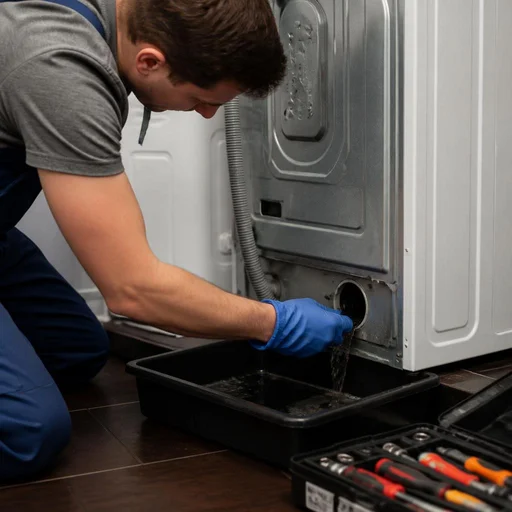
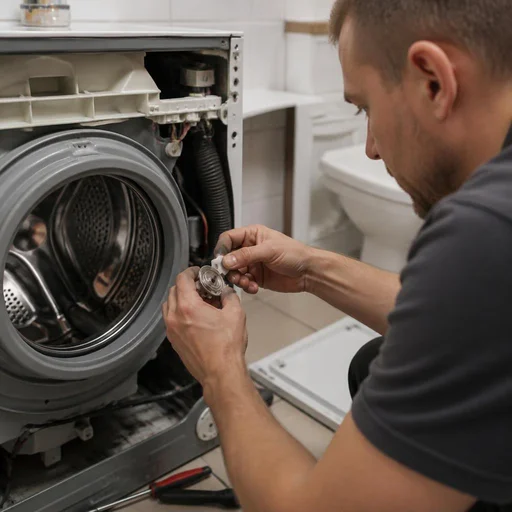
If a Daewoo does not drain water, the most common culprit is a clogged drain filter, hose or worn drain pump; if the spin fails, wear of the drum bearings is added to this. Lint, coins and small items from pockets clog the filter, the pump circulates water idly and gradually overheats, and the drain hose becomes overgrown with a greasy deposit inside. On the DWF and DWD series, a clogged apartment drain adds backpressure: the machine fills with water but cannot push it out, and the cycle hangs midway. With worn bearings, the drum begins to wobble, and the spin is switched off by the imbalance sensor. Before calling a technician, check the drain filter — if it is clogged with lint and small items, cleaning may get the machine working again without replacing components.
The machine does not heat water: heating element, temperature sensor, thermostat
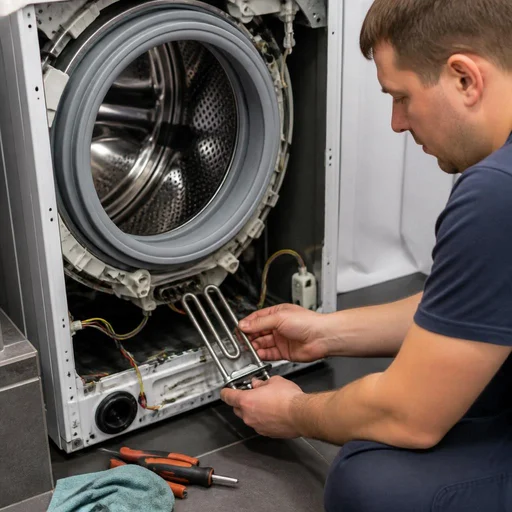
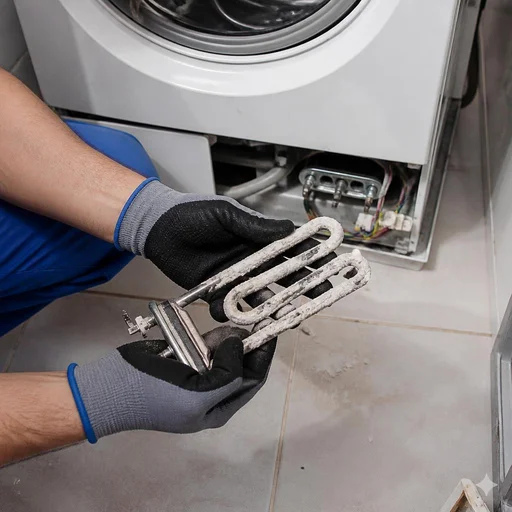
- Heating element: a limescale layer from 1 mm thick acts as thermal insulation, the coil overheats and shorts through the housing — the machine heats weakly or not at all.
- Temperature sensor: when it fails, the control module stops seeing the actual water temperature and blocks heating after the first cycle.
- Thermostat: stuck contacts give the machine a false command that the water is already hot, and the heating element does not turn on.
- Limescale: deposits on the heating element accelerate coil wear, and regular descaling is cheaper than replacing the component after the housing shorts out.
Noise, leaks and problems with switching on
| Symptom | Probable component | What we check |
|---|---|---|
| Humming and vibration during spin | Drum bearings | Shaft play, condition of the seal |
| Squeaking and knocking at low speeds | Drum spider | Cracks and corrosion of the spokes |
| Water on the floor under the machine | Door seal | Tears and hardening of the rubber |
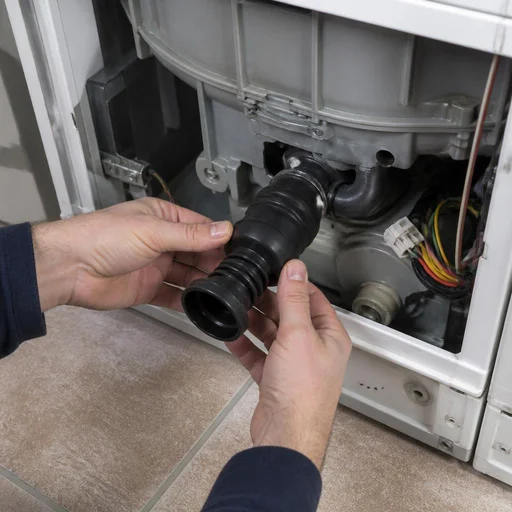
| Leak from the tank side | Drain hose | Clamps and cracks in the corrugation |
| The machine does not turn on | Power button, program selector | Contacts and switch travel |
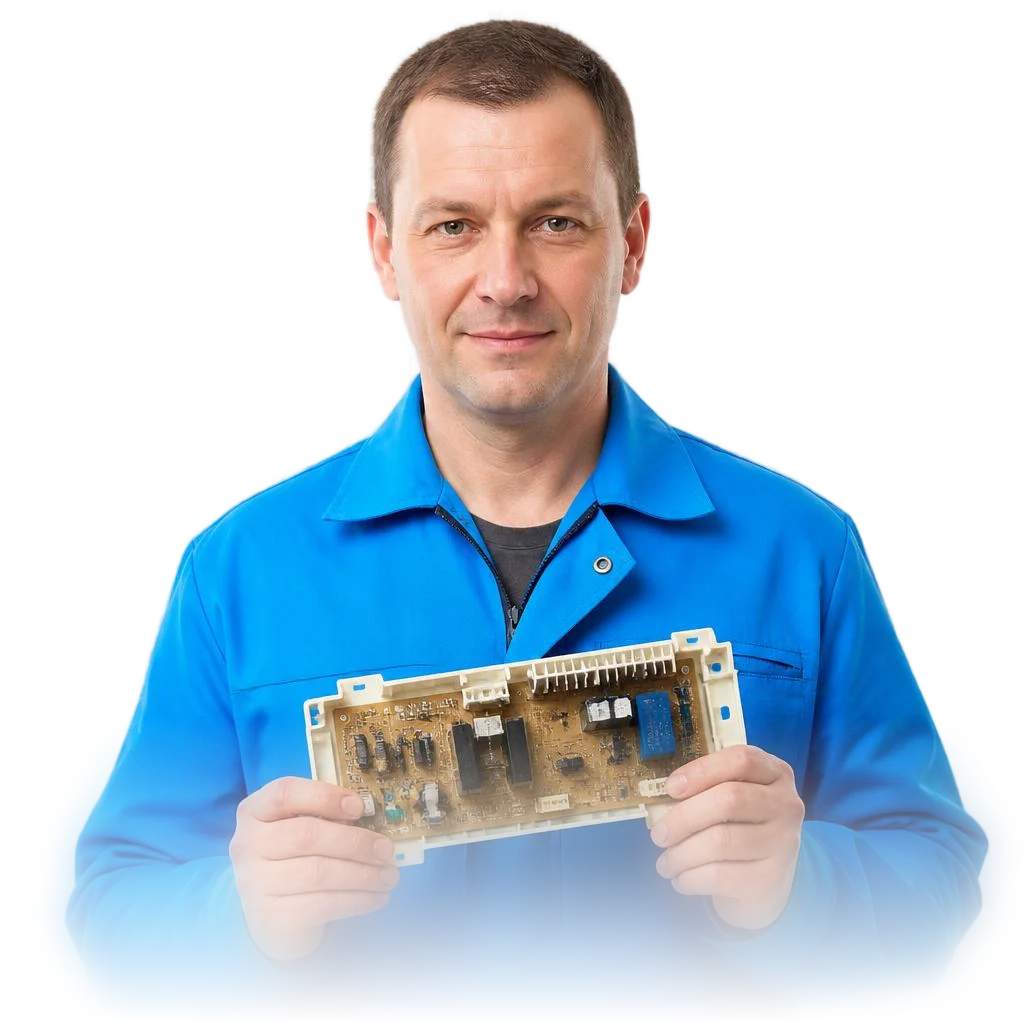
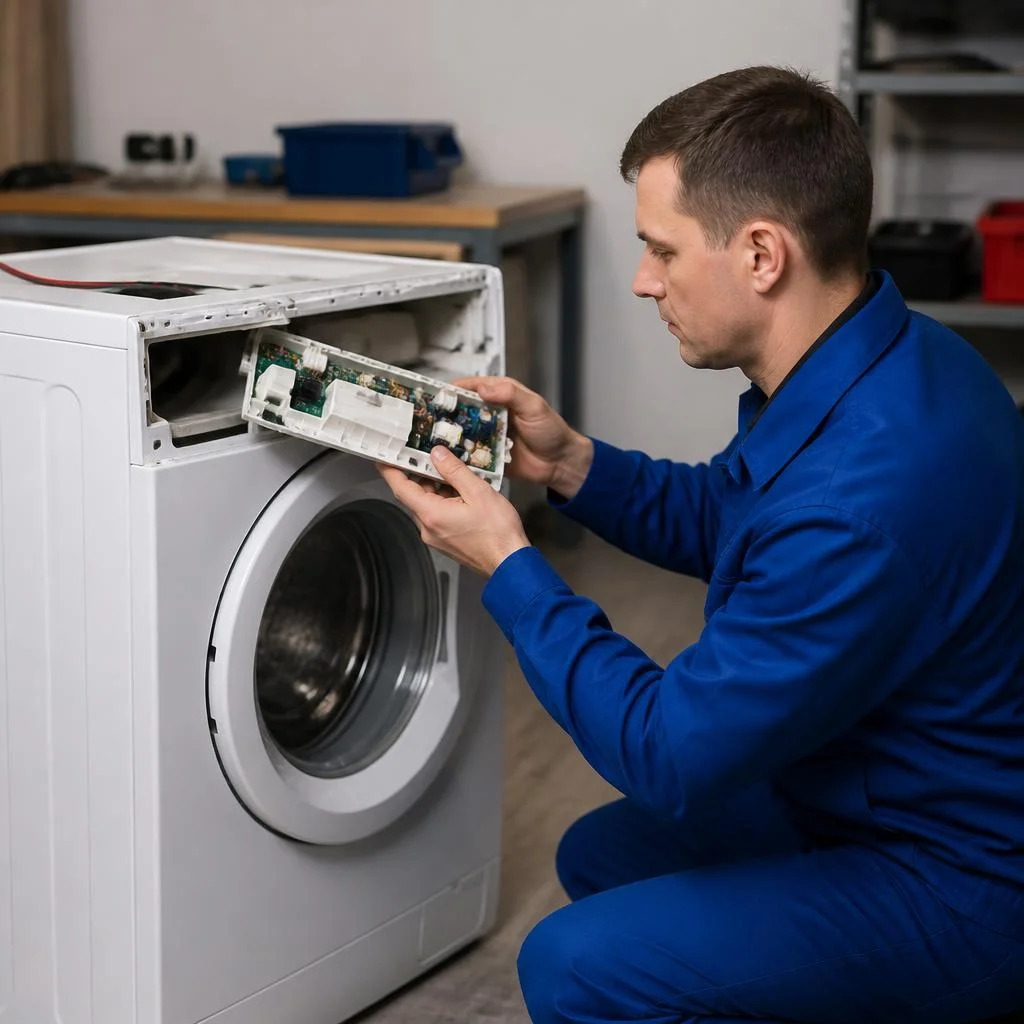
| No response to the program | Electronic module | Board power, traces, relays |
Seeking help early when there is humming is cheaper: as long as the spider is not destroyed, the work is limited to the bearings rather than replacing the entire tank assembly.
Daewoo washing machine repair: when there is one symptom but several causes
One symptom can have several different causes, so restoring operation always begins with diagnostics, not with replacing a component "at random". A drain failure looks the same whether the filter is clogged, the pump has burned out, or the drain is blocked — externally, the machine just sits with water in the tank. Weak heating can be caused by limescale on the heating element, a temperature sensor that has gone into error, or a stuck thermostat. The technician tests the chain of components in order: first the filter and hose, then the pump, then the wiring and module. Diagnostics saves money: replacing the pump when the hose is simply clogged is a typical mistake of do-it-yourself intervention.
Daewoo Error Codes: How to Read Diagnostics
Washing machines display an error code — it's a hint about which component to check first. Let's break down the main codes for the DWF, DWD, and DWS series and explain why a code doesn't equal a ready-made diagnosis.
What E1–E9 error codes mean on Daewoo
| Code | Problem area | What we check |
|---|---|---|
| E1 | Water intake | Inlet valve, pressure switch |
| E2 | Water intake | Water supply pressure, inlet filter |
| E4 | Water drainage | Drain filter, pump, hose, module |
| E5 | Heating | Heating element, temperature sensor, heater wiring |
| E6 | Heating | Thermostat, heating relay on the board |
| E7 | Motor | Tachometer sensor, brushes, motor winding |
| E8 | Sensors | Pressure switch, level sensor, wiring harness |
| E9 | Electronics | Control board, selector, buttons |
Code E4 triggers more often than the others: both when the drain filter is clogged, and when the pump impeller is worn, and when a trace on the electronic module is broken. The table gives a direction for troubleshooting, not a final verdict.
Why an error code doesn't replace diagnostics
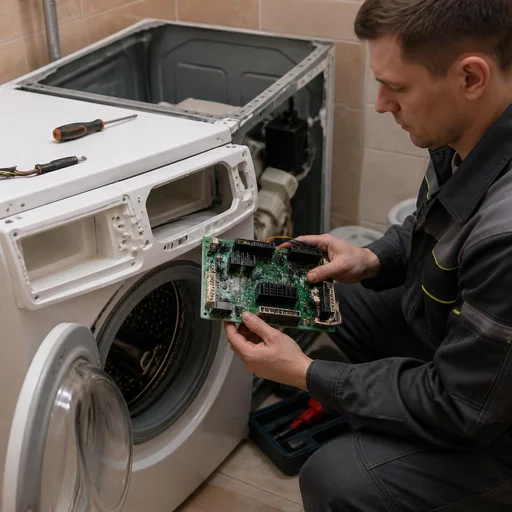
An error code narrows the search area, but doesn't show which specific component has failed — an accurate conclusion requires disassembly and checking components with a multimeter. Repairing Daewoo washing machines begins not with replacing the first part from the code line, but with testing all the components in that line. In our practice, E5 is equally often caused by three different reasons: a blown heating element, a temperature sensor that has gone open circuit, and an oxidized connector on the board. Resetting the error with a button without fixing the cause brings the code back after a few washes and can finish off a component that was still repairable: with a false E4, the pump motor runs dry and burns out within 5-7 cycles. A technician removes the cover, tests the heater, temperature sensor, and electronic module contacts, compares the resistance with the specification, and only then names the cause. This procedure saves the part and eliminates a repeat call-out.
How repairs work at Eco-Service: from request to inspection
Work can be carried out at home or at the service center in Moscow. We'll explain how the process works and how it differs from contacting a private technician or an aggregator.
Daewoo washing machine repair in Moscow: technician visit to your home
- Request: the dispatcher clarifies the model (DWF, DWD, DWS), the symptom and the address, and selects the nearest visit window.
- Visit: the specialist arrives with their own tools, a multimeter and standard spare parts — drain pumps, belts, hoses.
- On-site diagnostics: testing the heating element, temperature sensor, and checking the drain filter and pump takes 20-30 minutes.
- Repair: in most cases the technician completes the job in a single visit — replacing the pump, motor brushes or drive belt.
- Approval: if bench testing of the electronic module is required, the technician arranges transportation of the machine to the center; such work is not done properly at home.
Daewoo washing machine repair in Moscow: intake at the service center
Work on Daewoo washing machines in Moscow can be carried out at Eco-Service's own service center — machines are brought here for complex work: control board repair, replacement of the tank assembly, drum bearings and spider. Intake is in person: the engineer records the configuration, external damage and the agreed list of work in a report, after which the machine goes for diagnostics. On the test benches, the electronics are checked under load — spin, heating and drain programs are run to catch an intermittent defect that doesn't show up during a normal test. If the module is repairable, soldering is done on site; if not, a new unit is installed from the warehouse. When handing in the machine, check whether the serial number on the nameplate is still there — it makes it easier to select compatible parts.
How a service center differs from a private technician and an aggregator
| Criterion | Private technician | Service center |
|---|---|---|
| Availability of spare parts | Made to order, variable lead time | Own warehouse |
| Warranty | Verbal, without a document | 2 years, documented in a report |
| Diagnostics | Visual, at home | Bench testing under load |
| Repeat breakdown | You have to find the same technician again | Claim under warranty |
| Liability | Individual contractor | Organization |
A private technician and aggregators like Avito or Yandex.Services give you access to a contractor, but don't guarantee the availability of spare parts and a stable warranty — a service center is responsible for the work as a whole. On aggregators the cost is lower, but if a breakdown recurs you have to find the same technician again; the center documents the warranty.
Can you repair a Daewoo washing machine yourself
- You can do it yourself: clean the drain filter, remove scale with citric acid, check whether the drain hose is kinked.
- Risky: replacing the door seal or motor brushes without experience — it's easy to damage the edge of the tank.
- You can't do it yourself: replacing drum bearings, repairing the control module, removing the tank assembly.
- Spider: when disassembling the tank without a puller, it gets stripped, and instead of the bearings you have to replace the entire tank.
- When to call a technician: if the machine hums during the spin cycle, leaks from below or displays an error code — disassembling it yourself will worsen the wear.
Daewoo spare parts: original components and stock
The timeframe of the work directly depends on which components are installed in the machine and whether they are in stock. We break down what is kept in the warehouse and why the origin of a part matters more than its price.
Which Daewoo spare parts are in stock at Eco-Service
- Drain pump: a high-demand unit for the DWF and DWD series; we replace it when there is a drain error or a humming noise during the spin cycle.
- Heating element and temperature sensor: heating elements for standard Daewoo tubs; we resolve the problem of cold washing.
- Door seal: a gasket for standard doors; we eliminate leaks and the musty smell after washing.
- Drive belt and motor brushes: consumables for brushed motors of the DWS and DWD series.
- Tub assembly and drum spider: rare items; we order them for a specific series and machine number.
Why original components matter more than cheap analogues
Original spare parts are designed for the parameters of a specific series — analogues often differ in service life and geometry, which is why the unit fails again. A cheap analogue pump may not match in performance, and the machine will drain more slowly — this accelerates the wear of the new unit. The same logic applies to heating elements: a non-original element heats unevenly, scale builds up faster, and the temperature sensor detects overheating and stops the program. This is exactly how people often write to the service: Daewoo washing machine repair — and the technician immediately understands that an original unit for a specific series is needed. Servicing with compatible parts often comes back as a repeat request: through Eco-Service, machines are more often brought in after cheap components have been installed than after original ones. Before replacing a unit, check the part number by series — this is cheaper than replacing the same component twice.
Warranty, timelines and preventive maintenance
After a repair, it is important to understand exactly what the warranty covers and how to prevent a repeat breakdown. Let's go over the terms of warranty obligations, realistic repair timelines and the preventive maintenance that extends the service life of components.
2-year warranty on repairs and what it covers
Eco-Service provides a 2-year warranty on the work performed and the parts installed — if a component fails through our fault, we will redo the work free of charge. The coverage applies to the replaced drain pump, heating element, temperature sensor, thermostat, drum bearings, door seal, drive belt, pulley, spider arm and electronic module — the full list of items that a technician installs when servicing Daewoo washing machines. Genuine Daewoo spare parts carry the same two-year warranty as the work itself: the manufacturer confirms the component's service life, and we are responsible for correct installation. The warranty remains valid provided the operating conditions are observed: overloading the drum and unauthorised tampering with the component after the work void it — so do not disassemble the machine again or try to tighten the fasteners yourself.
How long a Daewoo washing machine repair takes
Most call-outs involving common spare parts are completed in a single visit; jobs involving bench testing of the module or replacing the tub take longer and are agreed separately.
- Replacing the drain pump, heating element, temperature sensor or belt: we keep the parts in stock, so the work is completed on the day of the request — usually within 40–60 minutes on site.
- Repairing the control board or replacing the electronic module: the module is removed and tested on the bench; the timeframe is one to three days depending on the nature of the fault.
- Replacing the tub assembly or drum bearings: a full disassembly of the housing is required; the work takes from several hours to a day and is scheduled separately.
- Rare components for the DWF, DWS and DWD series: if an item is not in stock, we confirm the delivery time with the supplier before starting work.
Preventive maintenance: how to call a technician less often
To make your Daewoo washing machine break down less often, clean the drain filter every 3–6 months, periodically remove scale from the heating element and do not overload the drum.
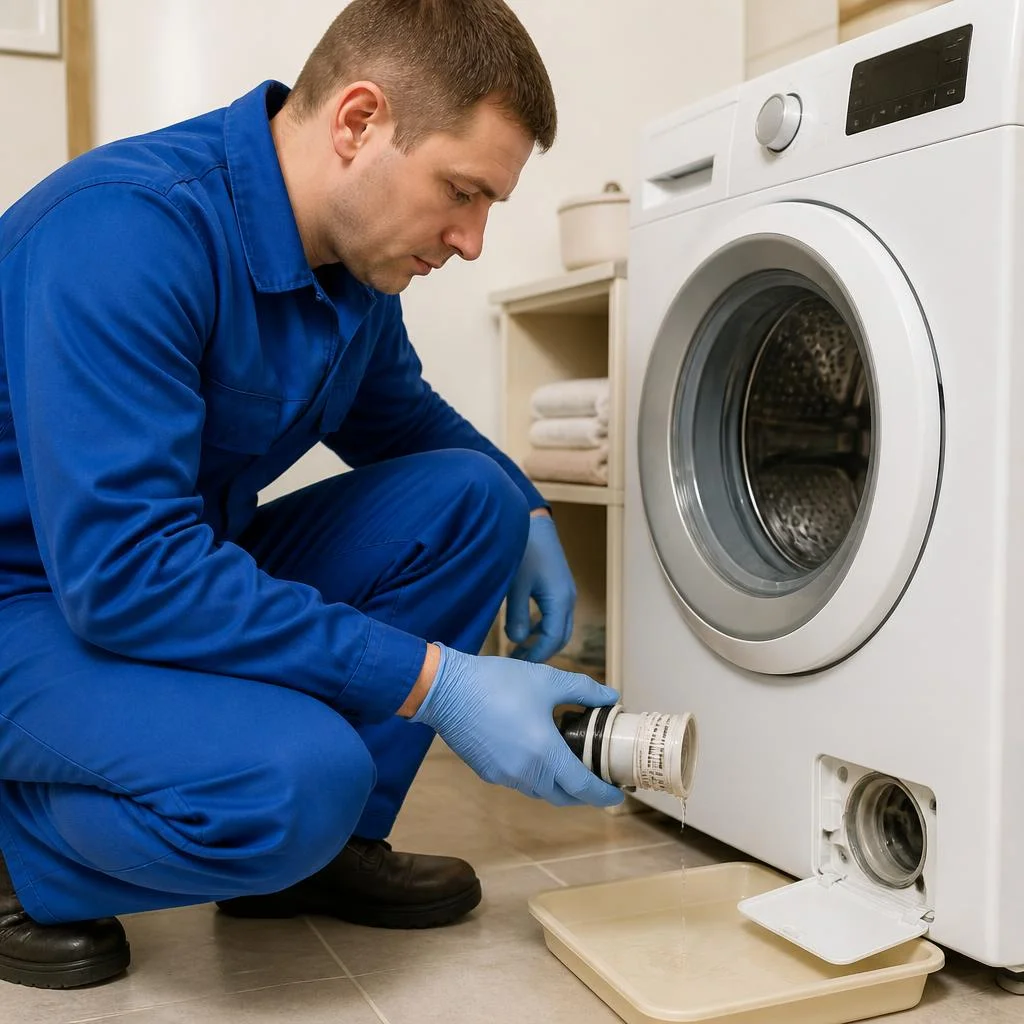
- Cleaning the drain filter: every 3–6 months unscrew the filter at the bottom of the housing and remove lint, coins and small debris — a clogged filter overloads the pump.
- Removing scale from the heating element: with hard water, run a cycle with citric acid or a special product every 4–6 months — a layer of scale accelerates overheating of the heater.
- Loading the drum: fill the tub to no more than two-thirds and distribute the laundry evenly — an imbalance destroys the bearings.
- Detergent dosage: add powder according to the instructions for your water hardness — excess foam washes lubricant out of the components and settles on the hoses.
- Checking the door seal: wipe the folds of the seal after every wash — stagnant water accelerates rubber wear and causes odours.
Conclusion
Diagnosing Daewoo faults comes down to a few components and the correct sequence of checks. Below is the key information to keep in mind before calling a technician or carrying out your own diagnostics.
Key takeaways
- Weak points: the drain pump, heating element, drum bearings and electronic module are the first to fail — they are checked before disassembling the housing.
- Codes E1–E9: they narrow the search down to a specific circuit, but do not replace multimeter testing and a visual inspection.
- One symptom — three causes: "won't drain" can mean a clogged filter, a failed pump or a control board fault, so diagnostics proceed from simple to complex.
- Only preventive maintenance is justified as a DIY task: cleaning the drain filter and removing scale from the heating element; disassembling the tub and soldering the module require tools and experience.
- An early call-out is more cost-effective: a humming bearing at the start is fixed by replacing a pair of parts, whereas neglected shaft play leads to replacing the tub assembly and spider arm.